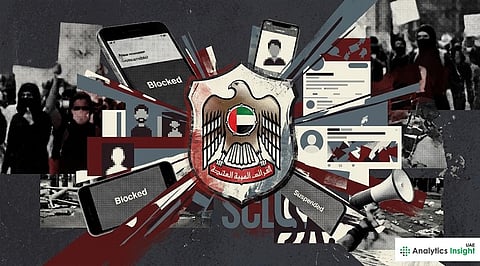


UAE authorities have blocked over 100 accounts for inciting violence during the Iran attacks. It highlights stricter digital monitoring and enforcement measures amid rising regional tensions over harmful online content.
During the session titled "Reshaping the Gulf’s Image in Global Media," speakers discussed how the region can better shape its international narrative. The discussion formed part of the wider Gulf Influencers summit, which brought together officials, creators and media figures to discuss the future of communication, influence and regional storytelling in a fast-changing digital age.
More than 100 social media accounts were blocked in recent months for violating a Gulf code of conduct during the Iranian attacks, according to Abdulla bin Mohammed bin Butti Al Hamed.
Speaking during a panel at the Gulf Influencers event on Monday, April 27, Bin Butti said the accounts were blocked in the recent past after publishing content that incited violence during the Iran attack.
“There is a signed document between Gulf Cooperation Council countries that commits all sides to ethics and conduct, respect for the state, respect for its symbols, respect for religions, and many public values,” he said.
Al Hamed urged regional media outlets to focus more on long-term achievements rather than disputes. “Our platforms sometimes speak about the 1 percent of disagreements and forget about 99 percent of achievements built over 50 years,” he said.
He added that many people outside the region still hold outdated assumptions about Arab societies, often linking them only to conflict or instability rather than development, innovation and modern cities.
Samira Rajab said image-building should be considered a strategic national priority equal to other forms of state strength.
“Rebuilding the Gulf image is extremely important. I see it as equal to the importance of building military power,” she said.
“We should not build an image on lies, but present ourselves as we truly are.”
She added that Gulf societies are often reduced to narrow clichés that fail to reflect their depth, culture and diversity. “We are not only oil, desert and luxury. We are people with depth and reality.”
Also Read: Iran Claims Strike on Oracle Data Center in Dubai; UAE Calls It Fake News
The UAE official said the accounts were not linked to one specific country, but were removed because they violated the agreement. Al Hamed said online content that promotes division or disrespect can damage both the targeted country and the place from which it originates, stressing that protecting society from harmful digital behaviour is a sovereign right.
Dr Saad bin Tefla Al Ajmi said the Gulf should focus less on public relations campaigns and more on showcasing successful examples that naturally reshape perceptions.
“I am not very enthusiastic about polishing our image abroad,” he said. “The examples that humanise this region are what matter: Qatar hosting the World Cup, Dubai receiving millions through its airport, and what Saudi Arabia achieves in organising Hajj.”
He said such achievements allow global audiences to witness the region directly, rather than rely on stereotypes or outdated media narratives.
“What we need are natural stories, service stories, stories of daily success,” he added. He also said the Gulf should continue building a unified message while recognising the strength of each country’s individual model.
“We have beautiful stories and achievements, but many of them were not told in the right way,” he said.