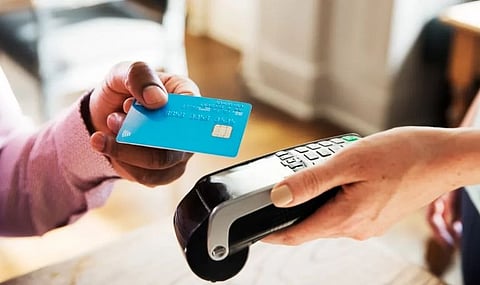


A shopper at a Dubai supermarket taps a phone against the terminal, hears the beep and walks off with the groceries. No cash, no change, no wallet. It takes about two seconds, and across the UAE it has become the normal way to pay, in supermarkets and malls, at cafes and on online stores, where shoppers now expect checkout to be quick.
Dubai set itself a target of 90% cashless transactions. In October 2026, the figure stood at 90.1%, just over the line. Government bodies are even further along, with cashless collections at 99.66% in the first half of the year, which leaves almost nothing paid in notes and coins.
Everyday spending tells a similar story. Visa's January 2026 report put digital payments at 80% of consumer payments in the UAE, and 68% of consumers said they made most of their payments by card or mobile device. Mobile alone covered 21% of transactions. Cash, meanwhile, was down to 16% of everyday purchases, from 25% in the survey before.
Two homegrown systems are doing a lot of the work. Jaywan, the national card scheme, started its nationwide rollout in July 2026, with cards that handle contactless taps, online purchases, in-store terminals, and ATM withdrawals. Eleven financial institutions were ready to issue them by that month. For the first time, the country has a domestic card network of its own sitting beside the international ones.
Aani works differently. It is an instant payment platform, and by April 2026 it had passed 12.5 million registered users, with 74 licensed financial institutions connected and around 774,000 merchants accepting it. The average transfer finishes in three seconds. That speed is the selling point for payments between individuals and small businesses, where waiting a day for money to clear makes little sense.
Queues are where the effect shows up first. A tap with a card, phone or smartwatch ends the sale in seconds, so a store can get through more customers on a packed Friday or during a holiday sale. Cashiers spend less time counting notes and making change, and that time goes to the people waiting.
Retail groups are widening acceptance of local options as well. In July 2026, Majid Al Futtaim switched on Jaywan at more than 200 UAE destinations across its retail, leisure, hospitality and entertainment sites. A family might buy groceries, watch a film and eat dinner in one mall visit, and the same card now works at all three.
Plenty of people no longer carry a card at all. Apple Pay and Google Wallet let a phone stand in for it, and tokenisation keeps the real card number out of the transaction, while device checks confirm the person paying is the owner. Banks and card networks pile on alerts, fraud screening and spending controls.
Choice matters at the till. In Visa's 2026 Global Digital Shopping Index for the UAE, 86% of shoppers said they take their preferred payment method into account when picking a merchant. A shop that turns away someone's usual way of paying can lose the sale to the one next door.
Stores are only part of it. Visa's October 2026 report, The Great Indoors: How the Couch Is Redefining Consumer Spending Habits, found that online and in-app purchases made up 55% of domestic payment volume in the UAE in 2026, against 35% in 2019.
Frequent online use has grown even faster: 25.7% of active UAE cards made ten or more online or in-app payments a month in 2026, compared with 4.5% in 2018. Food delivery is a clear example. Nearly 30% of active UAE cards showed up on delivery apps in 2026. In 2018, the share was around 2%.
Convenience has a cost. Phishing, cybercrime, data privacy problems and unauthorised transactions are all real risks, and a dropped internet connection or a dead terminal can stop a sale cold. Small businesses have to cover terminal and processing fees. Some customers also still prefer cash, or need help getting started with digital tools.
Retailers and payment providers carry the responsibility for protecting customer data and making fraud easy to report. On the shopper's side, a few habits help: a locked device, transaction alerts switched on and a second way to pay in case the first one fails.
Also Read - Best Digital Payment Apps in the UAE
Paying by tap started as a replacement for cash, but it now affects how fast a queue moves, which shop a customer picks and how much gets bought online. Dubai passing its cashless target, Aani's growth and the Jaywan rollout all point the same way, and the pace has been quick.
Accepting digital payments is now part of basic customer service for retailers. Shoppers get more say over how and where they pay. Whether that holds up depends on businesses keeping transactions safe, serving customers who are slower to adopt, and making sure paying never becomes the hard part of buying something.