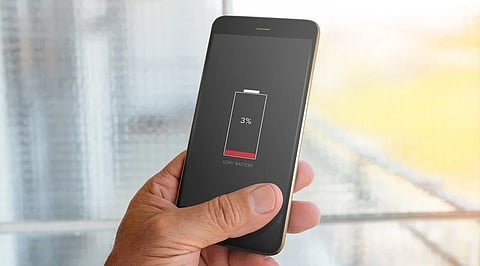


Modern smartphone batteries typically last two to three years or longer, depending on charging cycles, usage intensity and environmental conditions.
Newer smartphones may use advanced battery designs, including silicon-carbon technology, to increase energy density and improve capacity within limited space.
Avoiding excessive heat, enabling optimized charging and monitoring battery health can reduce wear and help smartphones remain useful for longer.
Smartphones have become an essential part of everyday life, from work and communication to entertainment and digital payments. But even as smartphone technology advances, one problem remains familiar: batteries gradually lose their ability to hold a charge.
The latest smartphones are making progress in battery longevity, with manufacturers improving charging technology, battery management and energy efficiency. Some newer devices are designed to retain at least 80% of their original battery capacity after 1,000 charge cycles. However, battery life depends on how a phone is used, charged and maintained.
So, how long can you expect a modern smartphone battery to last, and what can you do to extend its lifespan?
Most modern smartphones use rechargeable lithium-ion batteries. Under normal conditions, a battery may deliver satisfactory performance for around two to three years or longer before its reduced capacity becomes noticeable. Actual results vary with usage, temperature and charging habits.
The battery lifespan is usually calculated in terms of charge cycles. A single cycle means using a total of 100 percent of the battery’s capacity, regardless of how long it takes to use that amount.
If 50 percent of the battery is used on one day and another 50 percent on the next day, then that would count as one charge cycle.
Apple states that batteries in iPhones of the 15 series onwards are engineered to maintain 80 percent of their original capacity after 1,000 charge cycles in perfect conditions. Similarly, Google states that Pixel 8a and its successors are engineered to have at least 80 percent capacity for around 1,000 charge cycles.
These are just rough estimates, not guarantees. The battery will not stop functioning as soon as the specified number of cycles is reached.
Also Read: TCL Enters UAE Monitor Market with 4 K OLED+ Flagship, Three Mini-LED Models
Phone manufacturers are also investigating silicon-carbon batteries as a means of increasing energy storage within a defined volume. In doing so, they can increase the battery capacity available in a phone without needing to increase its size.
A higher-capacity battery does not necessarily mean longer battery life. Reportedly, the Samsung Galaxy Z Fold8 2026 series incorporates silicon-carbon batteries.
As per the product specifications from Europe, the battery is rated to last up to 1,200 charge cycles before dropping to 80% capacity. In the process, it underscores the difference between battery capacity and battery life.
Heat is one of the leading causes that negatively impact batteries. Long-term exposure to the sun, high-end gaming, excessive camera usage, and charging in a hot environment can speed up the aging of the battery.
The way in which you charge the battery is another aspect worth considering. Even though most smartphones feature protection mechanisms to prevent overcharging, maintaining the battery at 100 percent for extended periods tends to cause additional wear.
To help your phone's battery last longer:
Avoid exposing your phone to excessive heat.
Enable optimized charging or battery protection.
Use compatible chargers and undamaged cables.
Avoid intensive gaming when the phone is already overheating.
Install software updates that improve battery management.
A battery replacement could be a good option when you notice that your phone gets drained faster than usual, turns off randomly or fails to keep up with your daily tasks.
Battery health on iPhones can be seen from Settings > Battery > Battery Health. In Pixel 8a and later models, battery details can be found in Settings > About phone. Battery details can be seen from battery diagnostic features in Samsung phones.
The latest smartphone batteries are designed to last longer, but their actual lifespan depends on daily use and charging conditions. Many newer models target around 1,000 charge cycles before retaining approximately 80% of their original capacity.
With sensible charging habits, temperature management and timely battery replacement, users can extend their smartphones' useful lives without upgrading every few years. After all, a battery that has weakened with age does not necessarily mean the entire phone needs replacing.
Also Read: Smartphone Prices Rise: How the AI Boom is Driving Costs Higher
Most modern smartphone batteries deliver satisfactory performance for two to three years or longer. Their actual lifespan depends on charging cycles, temperature, usage patterns and maintenance.
A charge cycle represents using energy equivalent to 100% of battery capacity. It can accumulate across multiple partial discharges rather than one complete discharge.
Some newer smartphones are designed to retain approximately 80% of their original battery capacity after 1,000 charge cycles, although performance varies with operating conditions.
Fast charging is generally safe when supported by the device. However, excessive heat during charging can accelerate battery aging, making temperature management important for long-term performance.
Consider replacement when battery drain becomes excessive, unexpected shutdowns occur or capacity significantly declines. Check your phone's battery health settings or consult an authorised service centre.