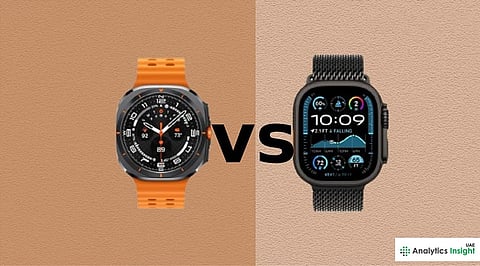


Choosing a smartwatch in the UAE ultimately comes down to the phone in your pocket, with Apple and Samsung completely locking down the premium market. While both brands deliver top-tier fitness tracking and sleek designs, they cater to entirely different users.
iPhone owners are locked into the Apple ecosystem, whereas Android users get the best compatibility, longer battery life and more advanced body-composition metrics from the Galaxy Watch lineup.
The two devices differ mainly in terms of their compatibility. Apple Watches will only work with iPhones. This results in a seamless integration between the Apple Watch and other Apple devices, including the iPhone and AirPods, iCloud, Siri and Apple Fitness+.
The Apple Watch has been available in the UAE since October 2025 and Apple offers its Apple Watch Series 11, Apple Watch Ultra 3 and Apple Watch SE 3 range beginning at approximately AED 1,599, placing Apple in the high-end price segment.
Like the Apple Watch, the Galaxy Watch provides additional flexibility. Samsung designs the Galaxy Watch primarily for Android; however, it works with a wide range of Android smartphones, rather than just Samsung.
The Galaxy Watch 7 and Galaxy Watch Ultra remain some of the most popular watches in the UAE and start at an approximate purchase price of AED 999, which makes the Galaxy Watch a more affordable alternative to many buyers.
Health tracking remains one of the most important smartwatch features today. Apple Watch continues to lead in this category, given its highly accurate sensors and advanced health tools.
The newest Apple Watch models now offer ECG tracking, blood oxygen checks, sleep apnea alerts, wrist temperature checks and new hypertension warning features introduced with watchOS 26. Apple built a strong reputation for its health system, which delivers medical-level accuracy.
Samsung has made major improvements in health technology this year. Galaxy Watch now includes ECG monitoring, blood oxygen checks, body composition analysis, advanced sleep tracking and AI-based health reports.
Recent tests done with Chung-Ang University showed Samsung smartwatch technology reached an 84.6% success rate in predicting fainting episodes within five minutes. This shows Samsung has made serious progress in health innovation.
Battery life creates another major difference between the two watches. Galaxy Watch performs better in this area. Galaxy Watch 7 offers around 40 hours of battery life under normal use, which means fewer charging sessions during the week.
Apple Watch Series 11 usually lasts about 18 hours before charging becomes necessary. Apple improved battery performance with Apple Watch Ultra 3, which can reach nearly 60 hours in low power mode, but the price remains much higher compared to Samsung.
Apple follows a clean and modern design with its well-known square display. Many users prefer this simple premium look. The software also feels smooth as Apple controls both hardware and software.
Samsung uses a classic round watch design that looks closer to traditional watches. Galaxy Watch also offers more watch face options and better customization. This gives users more freedom to change the appearance and overall experience.
Also Read - Best Smartwatches Under AED 200
Ultimately, the final decision on whether to purchase an Apple or Samsung watch will be based on the user's individual needs. However, for an iPhone user looking for high-quality, precise health tracking and a robust ecosystem, the Apple Watch is the best option available.
For an Android user who wants lower prices, long battery life, a wide range of customization options and excellent health and fitness features, the Samsung Galaxy Watch will be the best bet.
Apple continues to lead in premium ecosystem integration and advanced health features, while Samsung offers stronger value and flexibility. The Apple Watch has continued to dominate the luxury and ecosystem, while the Galaxy Watch is often viewed as the better overall value because of its versatility and broader compatibility.