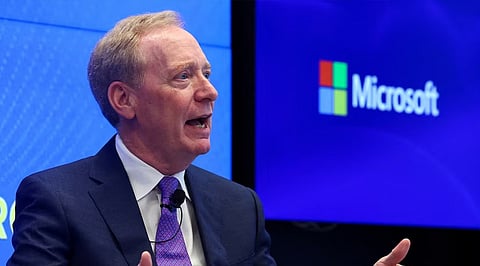


Microsoft President Brad Smith has called for stronger global regulations governing artificial intelligence (AI), warning that the technology faces fewer safety requirements than everyday consumer products such as milk and washing machines. He urged governments to introduce common safety standards, independent assessments and mandatory incident reporting as AI systems become increasingly autonomous.
In an interview with the BBC published on Monday, October 12, Smith argued that policymakers should apply established product-safety principles to artificial intelligence. He said governments already have mechanisms to protect consumers from risks associated with conventional products and should adapt similar safeguards for AI.
Smith proposed a global framework that would require companies to notify people affected by breaches involving rogue AI agents. He also called for emergency shutdown mechanisms that could stop AI systems when they behave unexpectedly or pose potential risks.
Smith said, “Independent evaluators should assess new AI developments before deployment. Such evaluations could help identify potential vulnerabilities and establish whether advanced systems meet acceptable safety standards.”
The proposals come as AI companies expand the use of autonomous agents capable of performing tasks with limited human intervention. These developments have intensified debate over whether existing safeguards can adequately address the risks associated with increasingly capable systems.
Smith identified the United Kingdom as a potential leader in AI oversight, citing its AI Security Institute, established under former prime minister Rishi Sunak. The institute receives pre-deployment access to major AI models through voluntary agreements, allowing it to evaluate their capabilities and risks.
UK AI Minister Kanishka Narayan said that the government would consider regulating advanced models if existing measures prove insufficient. As AI adoption accelerates, Smith's comments underline the growing pressure on governments to establish enforceable safeguards. The challenge will be to strengthen accountability and public protection without unnecessarily slowing innovation.
Also Read: AI Risks: Why Tech CEOs Want Stronger Human Controls