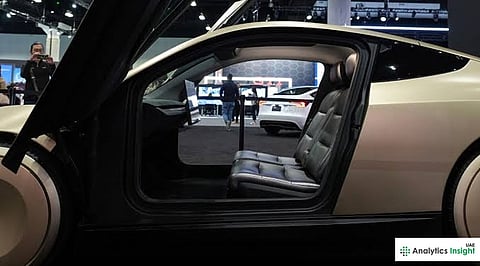


Tesla is once again under scrutiny for its autonomous driving capabilities after a video of its Cybercab operating on public roads without a steering wheel or pedals went viral. Filmed during the testing phase in Austin, Texas, the video received mixed reactions on social media.
Whereas some praised it as a breakthrough in transportation, others questioned the technology's readiness for market launch. This particular model is the first Tesla car to be built from scratch without manual driving controls.
Unlike conventional electric vehicles, the Cybercab is a purpose-built autonomous taxi that eliminates the steering wheel, accelerator, and brake pedals. The company announced the new idea in 2024, and now it has started to test the finished version on public roads. In the newest test drive, the car drove itself through the city streets with the help of its autonomous driving system, and there was no driver but only a safety driver who sat in the passenger seat.
This road test means that Tesla is sure about its Full Self-Driving system and also supports Elon Musk's vision of the future transportation system.
The Cybercab video soon began making its way around various social media platforms, sparking intense discussions about the future of self-driving technology. On the positive side, the car was heralded as the next evolutionary step in automotive design, citing that the omission of human error can one day make roads safer.
The lack of a manual mode became a point of focus for detractors, who cited that passengers wouldn't know how to react in case of any issues within the software or unforeseen road dangers. There was even some sentiment stating that self-driving cars have to prove their longevity and reliability first before taking out the human factor.
Tesla chose the right time to conduct the tests, as currently, the US regulatory agencies are discussing modifications that will allow for the removal of steering wheels and brake pedals from the self-driving vehicles designed for autonomous driving only without sacrificing braking capabilities.
Also read: Google’s Nano Banana 2 Lite Brings One-Minute AI Visual Explainers to NotebookLM