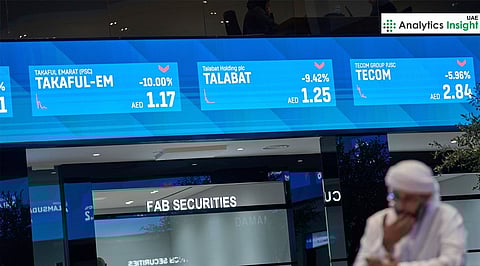


The stock markets in the UAE, specifically in Dubai and Abu Dhabi, have lost approximately $120 billion in value since the start of the US-Israel conflict with Iran. This major decline has made them among the hardest-hit financial markets globally. The conflict began on February 28, leading to sharp declines in the Dubai Financial Market and the Abu Dhabi Exchange. This situation has raised concerns about investor sentiment and the resilience of the UAE's financial markets.
Dubai’s benchmark DFM General Index has lost about $45 billion in market capitalisation a 16% drop. While Abu Dhabi’s ADX General Index has cut off roughly 9%, around $75 billion. Across the Gulf, other markets have seen mixed performance, with Qatar and Bahrain falling by 4% and 7%, respectively. Saudi Arabia and Oman recorded gains over the same period. Even on Wall Street, the S&P 500 fell about 7%. Mixed messages from US President Donald Trump on the war’s duration and objectives fueled broader uncertainty.
The war has disrupted its standing as a travel and tourism hub, while the UAE has been less exposed to the global energy shock caused by the Strait of Hormuz closure than many of its peers. The world’s busiest airport for international passengers is Dubai International Airport, as tens of thousands of flights have been cancelled. These cancellations compound market worries, as tourism contributed around $70 billion and 13% of the UAE’s GDP last year.
Haytham Aoun, assistant professor of finance at the American University in Dubai, said the market slide should be seen as a temporary shock. “It is clearly a short-term setback to investor sentiment and market confidence, but not necessarily a fundamental challenge to the UAE’s long-term economic plan.” He added that “international financial centers are judged on regulation, liquidity management, institutional resilience and operational continuity, not just short-term market swings.”
The UAE remains a top regional financial centre despite the losses. Dubai's total market value is expected to surpass $1 trillion in 2024, and Dubai is ranked seventh globally for competitiveness. For investors, the current declines underscore short-term volatility rather than a structural economic weakness. It is positioning the markets for potential recovery once geopolitical tensions ease.
Also Read: Market Slows Down in UAE as Middle East Conflict Hits Investor Confidence