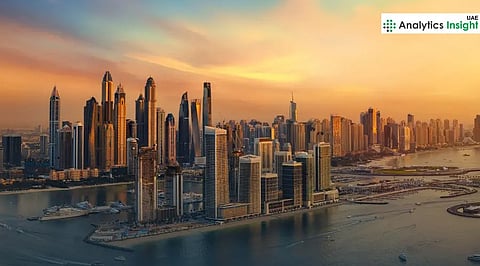


Dubai’s residential property market is entering a mixed phase. Overall deals and values are increasing, but some areas are softening their price values. This reflects the market is no longer moving in one direction, and the broader growth masks deeper divergences across segments.
Dubai recorded 47,996 property transactions worth AED 176.7 billion in Q1 2026, reflecting a 5.5% rise in volume and a sharp 23.4% increase in value. However, beneath this growth lies a change in momentum. “Rest assured there is still a market,” said Louis Harding, CEO of Betterhomes, while cautioning against viewing pricing trends uniformly. Instead, outcomes are increasingly tied to supply dynamics and micro-market conditions.
Apartments account for 84% of upcoming supply, compared to just 11% townhouses and 5% villas. This bend is likely to create pressure on apartment prices, particularly in areas with high inventory.
Harding pointed to structural advantages supporting villas, including limited new supply, larger sizes, and stronger owner equity. Townhouses, meanwhile, continue to benefit from sustained demand, driven by what he described as “the Dubai equivalent of the middle class coming through.”
Developers remain optimistic, emphasizing long-term fundamentals. “Even amidst the broader regional developments, Dubai’s underlying demand drivers and institutional stability continue to support long-term real estate investment,” said Deepak Batra of AUM Development.
Fresh project launches and construction milestones indicate continued investor confidence. AUM Development’s Ryze Residences in Warsan targets mid-market demand, while projects in Ras Al Khaimah, including Al Marjan Island developments, are witnessing strong sales momentum and steady construction progress.
At the same time, Sharjah is expanding its residential offering, with Arada delivering its first branded residences, signaling growing competition across emirates.
Dubai’s property market is not slowing; it is recalibrating. As Imran Khan noted, “What we are witnessing is not a slowdown, but a recalibration.” The next phase will likely reward informed decision-making, where location, asset type, and supply dynamics matter more than ever in shaping returns.
Also Read: Dubai Real Estate Sector Delivers Strong Performance in 2026 First Quarter