

Oil prices have dropped sharply after fresh signals from Washington hinted at possible progress in the US-Iran negotiations. Markets reacted quickly after US President Donald Trump claimed that talks with Tehran were progressing in a 'constructive manner,' and raised cautious optimism about a potential easing of tensions in the Strait of Hormuz.
Brent crude futures for July fell more than 5% to $97.94 per barrel by 04:00 GMT. The benchmark remains above pre-war levels, and it highlights how deeply the conflict has disrupted global energy markets since tensions escalated in late February.
Trump’s latest remarks created uncertainty across energy markets. In a Truth Social post, he said negotiations were progressing steadily and a deal had been ‘largely negotiated.' He also signaled that officials had instructions not to rush the process.
Trump stated that the US blockade on Iranian ports would continue until any agreement is formally signed and certified. His comments arrived a day after he indicated the reopening of the Strait of Hormuz could form part of the proposed settlement.
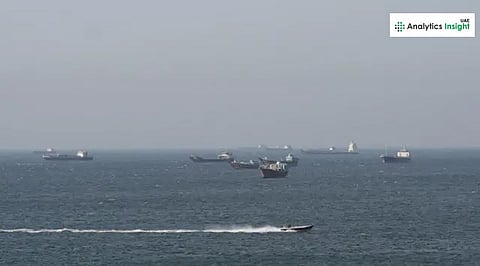
The Strait of Hormuz remains central to the crisis. Iran has effectively blocked the route since the war began, disrupting nearly one-fifth of global oil trade. Commercial shipping in the region has also faced pressure from the US blockade imposed on Iranian ports in mid-April.
Asian financial markets responded positively to falling crude prices. Japan’s Nikkei 225 surged more than 3% in early trading and touched a fresh all-time high after ending Friday at a record peak. Investors viewed lower oil prices as temporary relief from inflationary pressures for energy-importing economies.
Analysts, however, warned that supply risks remain severe. June Goh, senior oil market analyst at Sparta in Singapore, stated nearly 10 to 11 million barrels of crude oil remain shut in for every day the Strait of Hormuz stays disrupted.
Markets are now betting on the release of nearly 100 million barrels of stranded crude oil once restrictions ease. Analysts still expect a long recovery timeline for production systems, refineries, and shipping operations. Sparta estimates suggest restoring normal energy flows could take three to six months after any final agreement. The latest fall in oil prices reflects short-term optimism, though the broader market still views the region as highly unstable, with risks that could trigger another sharp spike in global crude prices.
Also Read: Brent Crude Falls 9% After Brief Hormuz Relief Ends, Oil Market Awaits Price Drop & Renewed Risk