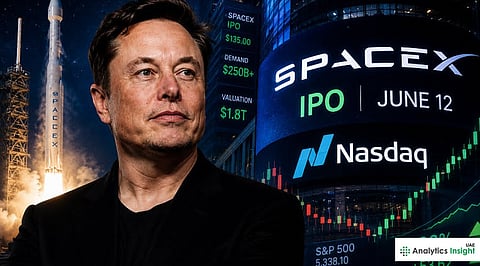


SpaceX is going public with a record IPO, one of the most-watched stock market debuts in recent years. The company priced its IPO at $135 per share, valuing it at $1.77 trillion ahead of its Nasdaq listing on June 12.
The offering raised about $75 billion by selling 555.56 million shares, making it the largest IPO ever. This valuation places SpaceX ahead of many major global financial and technology companies and sets a new record for public listings.
The SpaceX listing has crossed the earlier IPO record held by Saudi Aramco, which raised $25.6 billion in 2019. Even after adjusting for inflation, Aramco’s deal remains important, but SpaceX now leads in overall size and value.
Once trading begins, the company will be among the most valuable US-listed firms. However, analysts say SpaceX is still running at a loss. This raises questions about its long-term profitability compared with large, well-established companies.
A large share of the offering was given to retail investors, which is unusual for a deal of this size. SpaceX also set its price before the usual investor roadshow, moving away from the standard price discovery process.
Some investors expect strong demand in the early stage, while others say long-term performance will depend on steady trading after the debut. Analysts also point to a valuation gap between SpaceX and profitable large companies in banking, healthcare, and technology.
SpaceX depends heavily on its Starlink satellite internet business, which brings in most of its revenue. The company works in rocket launch services and satellite connectivity, serving consumers, businesses, and government users across many countries.
It has also grown its cloud and artificial intelligence presence through partnerships, including a long-term computing deal with Alphabet’s Google. SpaceX sees its AI and data systems as part of its future growth plan.
The IPO structure gives Elon Musk substantial control, owning about 82% of the voting rights after the listing. This guarantees the founder’s continued dominance over important issues. Some investors prefer this structure while others see it as a risk.
Financial experts also note the uncertainty in financial forecasts since the company's reliance on government contracts and long-term space projects. Some analysts say investing in SpaceX is more about future space growth than short-term profits.
The stock is expected to draw strong attention in its first trading session, with analysts noting that volatility is normal for large IPOs. Some expect small gains on the first day, while others warn that early excitement could push prices away from real value.
SpaceX’s listing also comes at a time when the US IPO market is showing signs of recovery. More deals are expected next year, including major technology and artificial intelligence companies. As trading starts, the focus will be on whether SpaceX can maintain investor confidence after its record valuation and turn its space and AI plans into steady financial results.
Also Read: Orbital AI Computing in 2027: Will Space Data Centres Transform the Future?