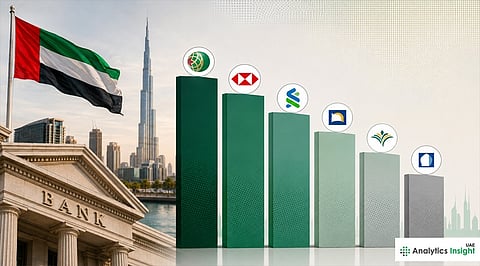


The banking sector of the United Arab Emirates has become one of the strongest financial systems in the Middle East. Over the last few years, banks in the country have shown steady growth given strong economic development, rising trade activity, growth in tourism and better investment opportunities.
In 2026, the UAE continues to hold its position as one of the most powerful banking markets in the Arab world, with total banking assets reaching more than AED 5.4 trillion, or nearly US$1.47 trillion. A few major banks control most of this market and play an important role in the country’s economy.
First Abu Dhabi Bank, widely known as FAB, remains the largest bank in the UAE in 2026. The bank has total assets of more than $400 billion, equal to around AED 1.47 trillion. FAB was created after the merger of First Gulf Bank and National Bank of Abu Dhabi and since then it has grown rapidly.
The bank has a very strong position in corporate banking, investment banking and wealth management. It also works closely with government institutions and large international businesses. Led by its huge balance sheet, FAB now stands among the largest banks in the entire Middle East and Africa region.
Emirates NBD holds the second position in the ranking. In 2026, the bank manages total assets between $330 billion and $340 billion, which equals nearly AED 1.2 trillion. The bank is the largest lender based in Dubai and has one of the strongest retail banking networks in the region.
Millions of people use Emirates NBD for savings accounts, credit cards, loans and digital banking services. The bank serves more than 9 million customers worldwide and has expanded its business across countries such as Saudi Arabia, Egypt, Turkey and India. Its strong customer base helps it remain one of the most powerful financial institutions in the UAE.
The third largest bank in the UAE is Abu Dhabi Commercial Bank, commonly called ADCB. In 2026, its total assets stand between $190 billion and $200 billion, which is more than AED 700 billion. ADCB has built a strong reputation in corporate banking and business finance.
The bank grew even stronger after the successful integration of Union National Bank in previous years. It serves both individual customers and large companies, which gives it a balanced business structure. Strong profits and stable financial performance continue to push ADCB higher in the banking sector.
Dubai Islamic Bank (DIB) is among the top four banks in the UAE by assets. As of 2026, it holds approximately $95 billion - $105 billion worth of assets in total. DIB is among the largest Islamic banking institutions in the UAE and indeed globally.
DIB adheres to Sharia (Islamic Law) banking guidelines, which is one reason its customer base is so large - many people prefer Islamic banking services to conventional banking services when available.
DIB has gained the trust of many customers for its ability to provide a high standard of customer service as well as consistently reliable overall financial performance. DIB is also an indicator of the growing trend toward Islamic banking service utilization within the region.
The fifth position belongs to Mashreq Bank, with total assets of $75 billion to $80 billion. Mashreq is one of the oldest privately owned banks in the UAE and has played an important role in the country’s financial development for many decades.
The bank has a strong presence in corporate banking, treasury services and international trade finance. It also focuses heavily on technology and digital banking solutions. This modern approach has helped Mashreq stay highly competitive in a market where innovation has become very important.
Several other banks also hold strong positions in the UAE banking market. Abu Dhabi Islamic Bank (ADIB) has total assets between $60 billion and $70 billion and remains another major Islamic banking institution. Commercial Bank of Dubai (CBD) follows with assets ranging from $43 billion to $45 billion, supported by strong growth in digital banking and services for small businesses.
National Bank of Fujairah (NBF) controls assets between $18 billion and $22 billion and has a strong position in trade finance. RAKBANK manages around $18 billion to $20 billion in assets and focuses mainly on retail customers and small businesses. Ajman Bank, with assets of $6 billion to $8 billion, continues to expand steadily in Islamic banking services.
Also Read - Best Banks in the UAE for Expats: Key Fees, Terms & All You Need to Know
The UAE banking sector in 2026 shows remarkable strength and stability. The five largest banks alone control most of the country’s banking assets. The sector continues to grow as banks invest heavily in artificial intelligence, digital banking systems and modern financial technology. Competition for customer deposits has also increased as more digital banking services enter the market.
Overall, the banking structure of the UAE remains highly concentrated, with First Abu Dhabi Bank, Emirates NBD, ADCB, Dubai Islamic Bank and Mashreq Bank leading the market. Their strong financial position proves that the UAE has successfully built one of the strongest banking systems in the Arab world and continues to move toward greater financial growth in the future.