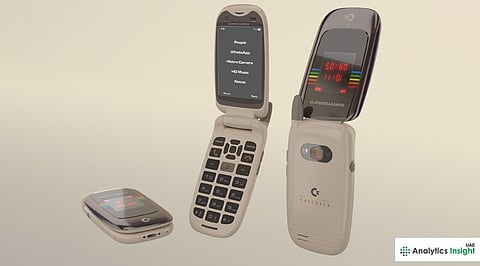


Commodore, the producer of the classic Commodore 64 PC, is back after a long gap with a surprise product. While people expected a new desktop or notebook from the company, Commodore instead introduced the Callback 8020—a flip phone designed to help users avoid screen addiction.
What sets the Callback 8020 apart from other phones is that it blocks social networking sites and web browsers at the operating-system level. Users cannot access apps like Instagram, TikTok, Facebook, X, and Reddit. Email apps and work-related software, including Slack and Microsoft Teams, are blocked on the phone as well. Commodore believes that it enables individuals to reclaim their time and attention.
The Callback 8020 is a modern gadget that combines the classic flip phone design and advanced specifications. It uses Sailfish OS as the OS that prioritizes privacy, and it comes equipped with a MediaTek Helio G81 chipset, 4 GB RAM, 64 GB storage, and a 48 MP rear camera. Moreover, it has a headphone jack, FM radio, and a removable battery. Commodore also included retro design elements to appeal to users who remember its classic products
However, there are still some essential applications one can use on the phone. Messaging apps like WhatsApp, Signal, and Telegram are not blocked. In addition, one can access maps, music streaming services, ridesharing apps, and podcasts.
The phone is marketed as a solution to those who suffer from too many notifications and endless scrolling. According to Commodore CEO Christian Simpson, it can be used as a second phone during evenings and weekends by people desiring a more balanced attitude towards technology.
The release of the device is seen as another step toward improving digital well-being. Products that promote focus, privacy, and reduced screen time remain attractive to consumers looking for alternatives to smartphones.
Despite the novelty, the price of 1,832.58 AED has caused quite controversial comments among users. Although many users like the concept of a distraction-free phone, they question whether consumers will pay flagship-level prices for a device that intentionally removes many core smartphone features.