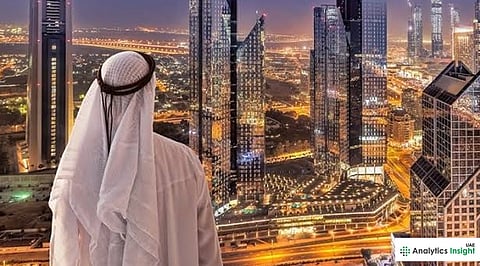


AI, IoT, and digital infrastructure are enabling smarter governance, efficient resource management, and enhanced urban experiences nationwide.
Smart buildings, renewable energy integration, and intelligent utilities support the UAE’s long-term environmental and net-zero objectives.
5G networks and data-driven infrastructure are accelerating innovation, improving mobility, and transforming public service delivery.
The UAE has managed to position itself among the best countries that have embraced smart infrastructure. All thanks to the deployment of new technology in the improvement of people's lifestyles and the creation of sustainable development. This tech-powered has a growing urbanization pressure resulting from the growth in population, environmental conditions, and increased needs for resources. This has led to the continued adoption of artificial intelligence, the Internet of Things (IoT), 5G, and advanced information systems to support smart city development.
From smart transport and energy-efficient buildings to public service delivery and smart communities, the implementation of smart infrastructure continues to revolutionize the lives of people.
Smart infrastructure refers to the process whereby advanced technologies are used in managing assets such as transportation networks, utility services, buildings, and public services.
The world has experienced a rapid increase in population within urban centers, making it hard for traditional infrastructure to accommodate the increased population. Issues of traffic, energy, water management, and public services have become serious problems facing all cities across the world. Smart infrastructure solves these problems by optimizing the use of available resources in an environment where circumstances are always changing.
Within the UAE, smart infrastructure plays a very important role in achieving development. Through smart infrastructure, the UAE will realize its objectives of economic diversification, efficient use of resources, environmental sustainability, and improvement of the quality of life of the people.
Dubai and Abu Dhabi have emerged as some of the best examples of how technology can be leveraged for urban planning. Both cities have taken up initiatives to establish connected urban ecosystems that incorporate the use of digital technology to make their cities better places to live in.
Dubai has embarked on the journey of establishing smart cities that include digital governance, smart mobility, smart utilities, and citizen services. Citizens can access a wide range of government services online, saving on paperwork. Smart technologies will also be incorporated in the transport networks, urban infrastructure, and urban management systems.
Abu Dhabi is following a similar approach by making investments in intelligent infrastructure, sustainable development, and innovation in urban planning. The city has adopted AI-based solutions for traffic management and utility management.
One of the key aspects of the process is the adoption of digital twin technologies—virtual modeling of real-life assets and environments. The technologies help the authorities in simulating scenarios and making decisions using data-driven approaches.
AI and the Internet of Things play an integral role in building the UAE's vision of a smart city. It is through the interaction of both technologies that large volumes of data are collected, analyzed, and processed by infrastructure systems.
Devices of IoT technology are installed within transportation networks, buildings, utility services, and public spaces. The sensors in such devices gather data concerning traffic flow, consumption of energy resources, the state of the environment, and the performance of infrastructure facilities.
AI is what turns this data into useful conclusions. With the help of advanced algorithms, cities can predict future maintenance needs, optimize the distribution of available resources, and automate routine tasks. For instance, AI-based traffic control systems may be used to detect any patterns of traffic congestion and optimize their timing accordingly. Providers of utility services can also predict any future problems using predictive analytics. Therefore, AI and IoT are helping municipal authorities move from reactive management towards proactive decision-making.
Transportation is an important element of every smart city, and the UAE pays much attention to implementing smart mobility solutions that will solve such problems as traffic jams, connectivity, and the impact on the environment.
Traffic management systems of Dubai employ AI and analysis of live data in order to control the state of roads and optimize traffic lights to minimize travel time. Smart parking systems are also designed to guide drivers to vacant spots and minimize the time necessary to find a parking space.
There is also development in the field of modern public transportation, as many of its elements have already received smart characteristics. This includes smart tickets, passenger information, and the prediction of schedules, making smart transport more convenient for people to use.
Moreover, the UAE is also paying much attention to autonomous mobility technologies and even has some pilot projects of self-driving vehicles and other technologies of intelligent transport infrastructure.
The development of a smart city must pay attention to the creation of smart infrastructure. Developers try to implement advanced technologies in various types of buildings, including residences, offices, public buildings, and other buildings.
Such smart infrastructures include sensors that monitor and control the activity of heating or cooling systems, lighting, security, and other aspects of a building's operation. Smart building management systems operate depending on the number of people in buildings and the environmental conditions.
The energy efficiency of building construction, the implementation of intelligent climate control systems, and smart metering systems have become popular in the construction of new buildings. Such innovations do help reduce negative impacts on the environment but also increase comfort and provide convenience for the residents.
In addition, the technology of predictive maintenance can be implemented in many buildings. It is able to identify the problem in advance in order to fix it and save money and time on repairs. The importance of sustainability in the region makes smart building technologies very relevant in terms of saving energy. Here’s a brief of the entire process.
The UAE has set its sights on reaching net-zero carbon emissions by 2050. Sustainability is playing an integral role in infrastructure development. Smart infrastructure solutions have allowed this vision to become reality.
Smart energy grids improve energy distribution and allow renewable energy sources like solar power to be connected. Smart meters inform the consumer and the energy provider about the consumption of energy. Water management is also a vital issue. Smart monitoring solutions help find and prevent water leaks and optimize distribution. This issue is especially relevant in an area that does not have many natural resources.
Urban planning for sustainable development is also becoming the hallmark of new infrastructure projects. Modern and efficient architecture, transportation systems, and sustainable planning techniques are now being introduced into large-scale projects. The UAE is thus implementing digital innovations to foster sustainable development.
The rapid development of 5G networks is helping the UAE to become smarter, as 5G networks help establish connections that can be used by millions of devices and applications in real time.
Unlike earlier mobile technologies, 5G provides much faster speed, low latency, and more capacity. The technology enables smooth interaction between different systems of infrastructure, transport, buildings, and public services. The technology helps to develop various applications from autonomous transportation and smart health care to industrial automation and virtual reality. It also improves the efficiency of AI and IoT systems as 5G helps to transfer and process data faster.
For companies, 5G brings many new opportunities to innovate and transform digitally. For governments, it provides the basis to implement smart cities' systems. With the development of 5G coverage, connected technologies will become a source of innovation for cities in the UAE.
Data has emerged as one of the most important sources in modern urban governance. The smart infrastructure is capable of continuously providing streams of data that can be used by the governments to optimize the service delivery and the functioning of their institutions.
Through the analysis of transportation data, utilities data, data collected from health centers, and data generated by public services, the governing bodies will be able to identify patterns, forecast the future demand for various services, and allocate the required resources. Digital platforms have also helped to streamline the communication between citizens and the governing bodies. Citizens can request various services, make payments, and get updates through various digital channels.
Data has also enabled governments to increase their safety and emergency response capabilities. As urban areas continue to develop into more connected places, it is expected that data-driven infrastructure will become increasingly important in the provision of efficient and effective services.
Looking ahead, large projects continue to push forward the UAE’s vision of building smart infrastructure in 2026. Dubai is developing a network of smart transportation infrastructure using AI-based traffic control systems, smart mobility systems, and smart public infrastructure.
In Abu Dhabi, investments are being made in smart utility networks, connected public services, and environmental monitoring systems aimed at increasing efficiency and sustainability. These efforts relate to other objectives related to economic development and improvements in quality of life.
Masdar City is one of the best examples of sustainable city innovations. This project serves as a platform for implementing innovative solutions in renewable energy generation, smart mobility, and environmentally friendly city design. Investments in smart digital infrastructure, renewable energy, AI-based government systems, and telecommunications networks are transforming the cities in the UAE.
Investment in emerging technologies, sustainability solutions, and digital transformations will remain the driving factors for the future trends in the UAE. AI, robots, digital twins, autonomous mobility, and analytics will become a common part of urban management.
Partnerships between the public sector and private investors will remain important for funding and implementation of smart infrastructure projects. However, an increase in spending on research, innovations, and startup ecosystems will lead to faster creation of new technologies for urban areas.
With the increase in connectivity of cities and their development towards smarter urbanization. The emphasis will shift from infrastructure improvements to the creation of human-centric solutions focused on sustainable growth and efficient performance.
A smart city has emerged as an integral part of the vision of the UAE regarding its future. It has started developing smarter cities where artificial intelligence, the Internet of Things, 5G, and other technologies have been incorporated into urban planning. This helps make the cities efficient, sustainable, and responsive towards the needs of the citizens.
In fact, all aspects of urban development, from transport, smart buildings, digital governance, to renewable energy integration, have seen a transformation with the incorporation of such innovations. With increased investments and adoption of technology, the UAE seems to be emerging as a global frontrunner in the field of smart city development.
A smart city uses digital technologies such as AI, IoT, data analytics, and connected infrastructure to improve public services, sustainability, transportation, governance, and overall quality of life for residents.
AI analyzes real-time data collected from infrastructure systems, helping authorities optimize operations, predict maintenance needs, improve transportation efficiency, and automate public services across cities.
5G provides high-speed, low-latency connectivity that enables real-time communication between devices, supports IoT deployments, and powers advanced applications including autonomous transportation and smart services.
Smart buildings use automated systems and sensors to optimize energy consumption, improve operational efficiency, reduce emissions, lower costs, and support the UAE’s sustainability objectives.
Smart infrastructure improves energy efficiency, integrates renewable energy sources, optimizes water management, reduces emissions, and enables sustainable urban development aligned with national climate commitments.